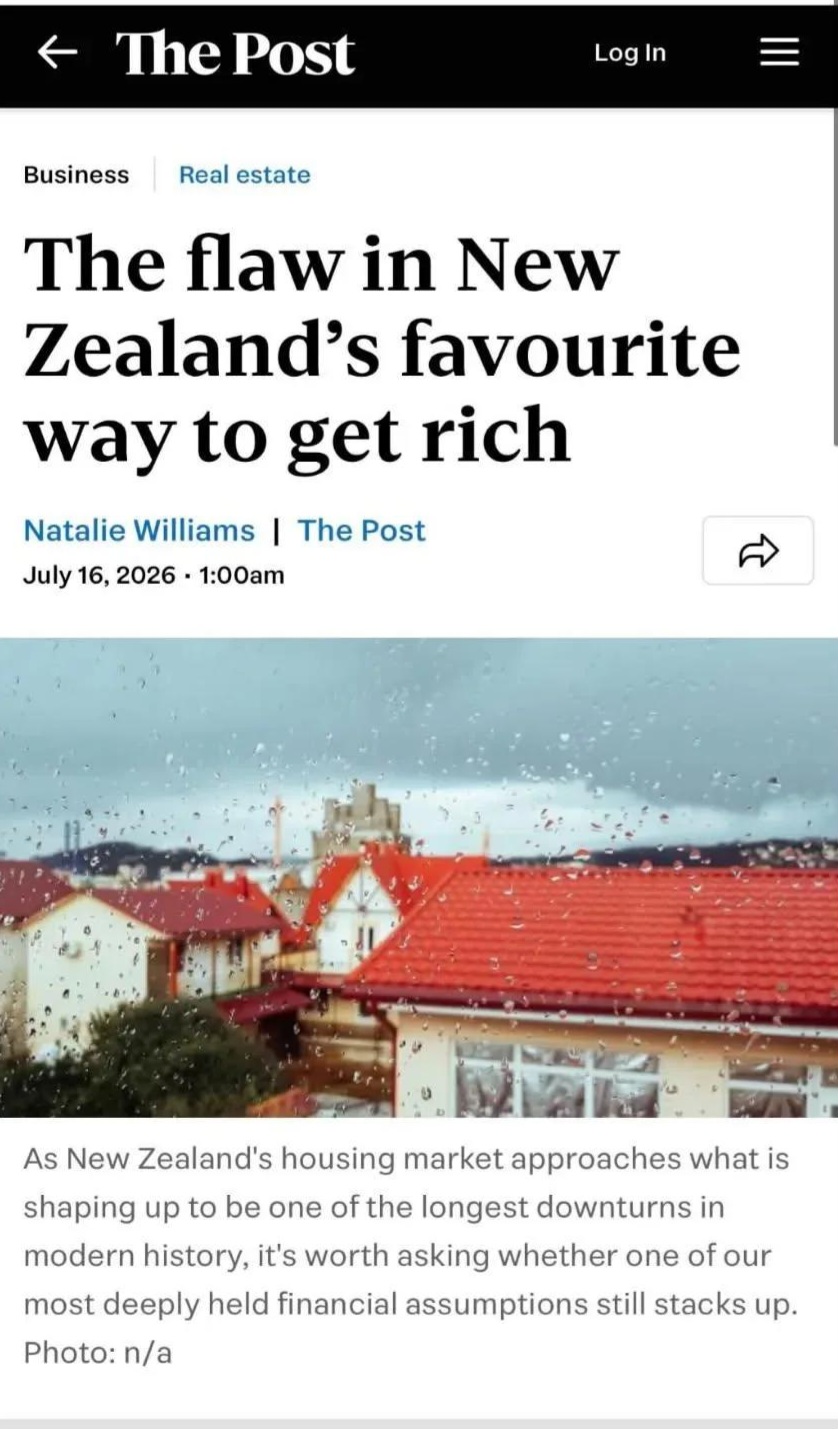
For a significant number of households, the vast majority of their net worth is tied up in residential property, often within a single city and entirely dependent on the fortunes of the New Zealand economy. While prices were rising rapidly, that concentration didn’t feel like a risk because almost everyone appeared to be benefiting. Today’s market tells a different story.
Higher interest rates, softer capital growth, rising ownership costs and comparatively modest rental yields have all combined to challenge the long-held assumption that residential property alone can provide the financial security previous generations experienced. While many homeowners still have considerable equity, the current downturn has highlighted just how vulnerable household wealth can become when so much of it is concentrated in one market.
As someone who has spent years working in property investment, I’ve noticed a significant shift in the conversations people are having. Increasingly, investors aren’t asking where New Zealand’s next property hotspot might be. Instead, they’re questioning whether relying on one domestic market for the bulk of their long-term wealth is still the right approach and that conversation reflects a much broader change in investor thinking.